
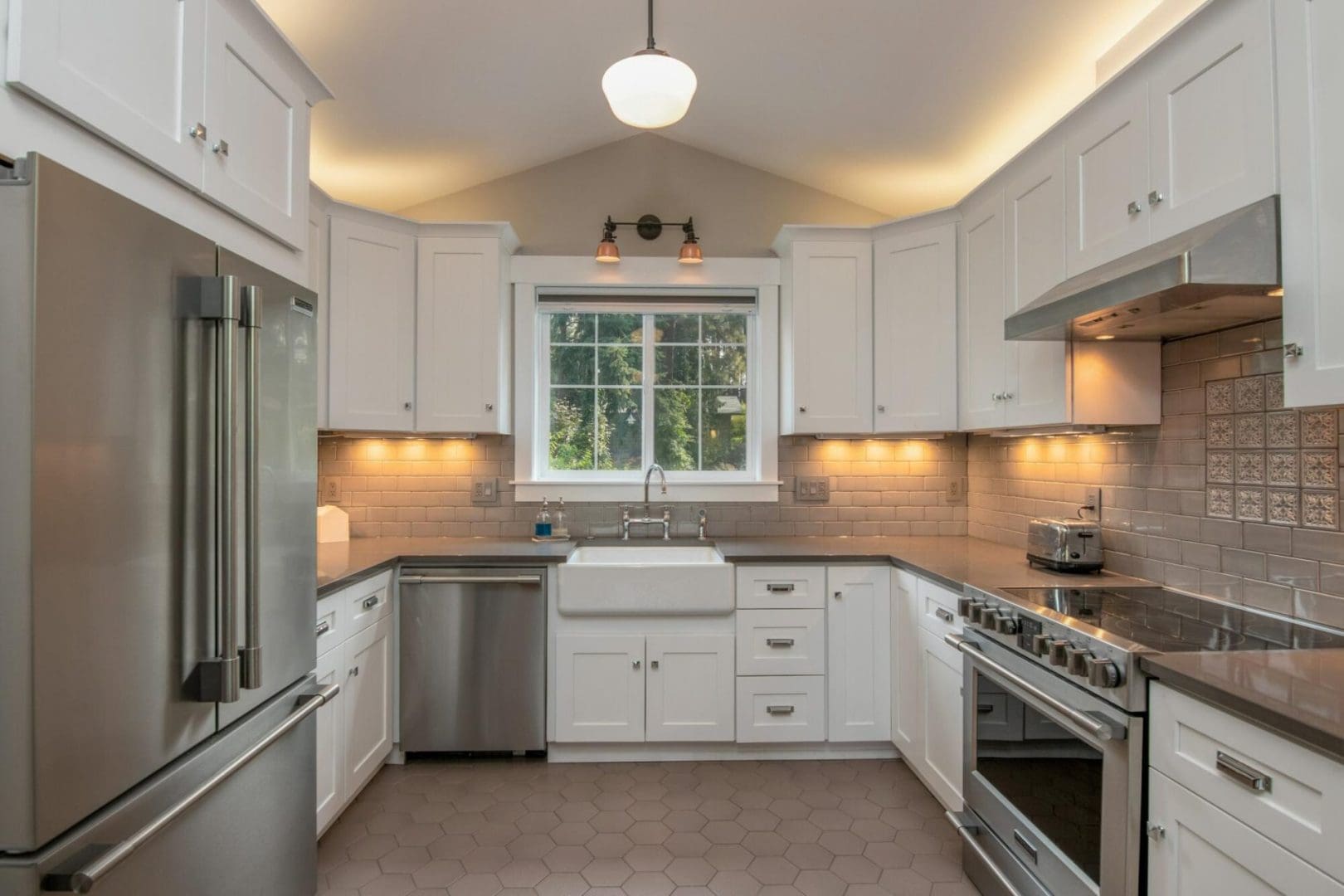
If you’re wondering, “What is the most expensive part of a kitchen remodel?”, it’s cabinetry, then appliances and overall labor. Countertops and flooring also eat into the budget, especially if you want something durable.
Are you tired of your outdated kitchen? It’s easy to get swept up in the excitement of a kitchen remodel, but the price tag might surprise you if you come in unprepared.
That’s why it’s worth asking the most important question first: where does the kitchen renovation cost actually go?
Understanding the Major Expenses of a Kitchen Remodel
Cabinetry is usually the single largest expense in a kitchen remodel, often taking up a third or more of the total budget. This cost comes down to a few things, such as:
- Real woodworking skill
- Durable materials
- Installation that has to be precise
Stock cabinets, built in standard sizes ahead of time, cost considerably less than custom builds.
Appliances come next. A high-end refrigerator, a professional-grade gas range, or a dishwasher engineered to run near-silently can each add thousands to the total bill.
Labor is its own major category, separate from materials. Plumbers, electricians, and general carpenters all have to sign off on their part of the work. This matters partly because code requires it and partly because a kitchen that isn’t wired or plumbed correctly becomes a much bigger problem later.
Countertops and flooring come next. Natural stone options, like granite and quartz, require specialized cutting tools and enough manpower to move and set slabs that can weigh several hundred pounds.
The Cost of Kitchen Cabinets
Cabinets play a role in how a kitchen looks, and that visibility can be quite expensive.
Custom cabinets are built to the exact dimensions of your room. This means maximum storage, and you get full control over design, but it’s the highest cost of the three options.
Semi-custom cabinets are manufactured in standard box sizes but allow customization on door style and finish. They’re somewhere in the middle price-wise.
Stock cabinets are pre-made and ready to buy off the shelf. They’re the least expensive option, though they come with fewer choices in size and configuration.
Whichever tier you choose, professional installation matters, since cabinets need to be level and firmly anchored into wall studs.
Appliance Costs
Modern kitchens depend heavily on their appliances, and pricing varies more than people expect. Some of the most expensive kitchen features aren’t structural at all; they’re sitting right there on the countertop or built into the wall.
This includes:
- Refrigerators with built-in panels or smart touchscreen displays
- Ranges and cooktops, which often require a dedicated ventilation hood that adds to installation cost
- Dishwashers with quiet operation and advanced filtration
Pro tip when shopping around: Buying appliances as a matched set from one manufacturer can unlock bundle discounts not available when buying separately.
Labor and Installation Fees
A home remodel this involved requires several different trades working in sequence. This includes:
- Plumbers, who reroute water lines for sinks and dishwashers
- Electricians, who upgrade circuits so they can safely handle heavier appliance loads
- A general contractor, who typically oversees the schedule and coordinates the municipal inspections
Set some reserve funds aside in case labor goes over what you’re expecting to pay.
Countertops and Flooring
Durability matters most here, since these surfaces take the most daily wear.
Quartz and granite resist heat and scratching well, which is part of why they remain popular despite a high per-square-foot cost. Laminate offers a far cheaper alternative that mimics the appearance of stone reasonably well, though it won’t hold up the same way.
Hardwood and porcelain tile are common flooring choices for the same reason.
Lighting and Electrical Upgrades
Lighting can add up faster than expected once the work actually begins. Recessed lighting alone often requires cutting into drywall and ceiling joists, and each fixture needs its own wiring run back to a switch or panel.
Older kitchens often need more than cosmetic lighting work, too. A kitchen built decades ago may not have the electrical capacity to safely run a modern range, a garbage disposal, and several small appliances on the same circuit. Upgrading the panel or adding dedicated circuits isn’t optional in that case; it’s a code requirement, and skipping it creates a real safety risk down the line.
Frequently Asked Questions
Can I Save Money by Painting Old Cabinets?
Yes, and it’s one of the more effective budget moves available. Refinishing existing cabinet boxes with cabinet-grade paint delivers a noticeably updated look without the cost of full replacement. It won’t solve structural issues if the cabinets themselves are falling apart, but for boxes that are still solid, repainting can go a long way for your budget.
How Can I Lower My Remodel Budget?
Cutting kitchen costs usually starts with leaving the existing room layout untouched, a smart move in any kitchen remodel budgeting strategy. That’s the single biggest lever available.
Relocating sinks, refrigerators, or ranges means opening up plumbing and electrical work behind the walls, which is expensive regardless of what finishes you choose.
Mixing in lower-cost materials, like laminate counters or stock cabinets, in areas that see less daily attention can also help your budget go further.
Why Do Unexpected Costs Happen During a Remodel?
Older homes often hide problems behind their walls. This includes:
- Outdated wiring
- Corroded plumbing
- Water-damaged subfloor
A contractor can’t install new cabinets over rotting wood. Setting aside a contingency fund for smart kitchen investments tends to keep the project from stalling.
See examples of completed kitchen remodels to get a feel for real project costs.
What Is the Most Expensive Part of a Kitchen Remodel?
What is the most expensive part of a kitchen remodel? Cabinetry, appliances, labor, and materials all add to the total cost. Understanding these expenses ahead of time makes it possible to plan confidently instead of guessing.
VanRossun Contracting has brought over 30 years of remodeling experience to homeowners across Austin, TX. We favor our trusted team rather than rotating subcontractors, offering you fewer surprises from the first consultation through project completion. Contact us today for a free estimate on your next Austin remodel.